
Why visit
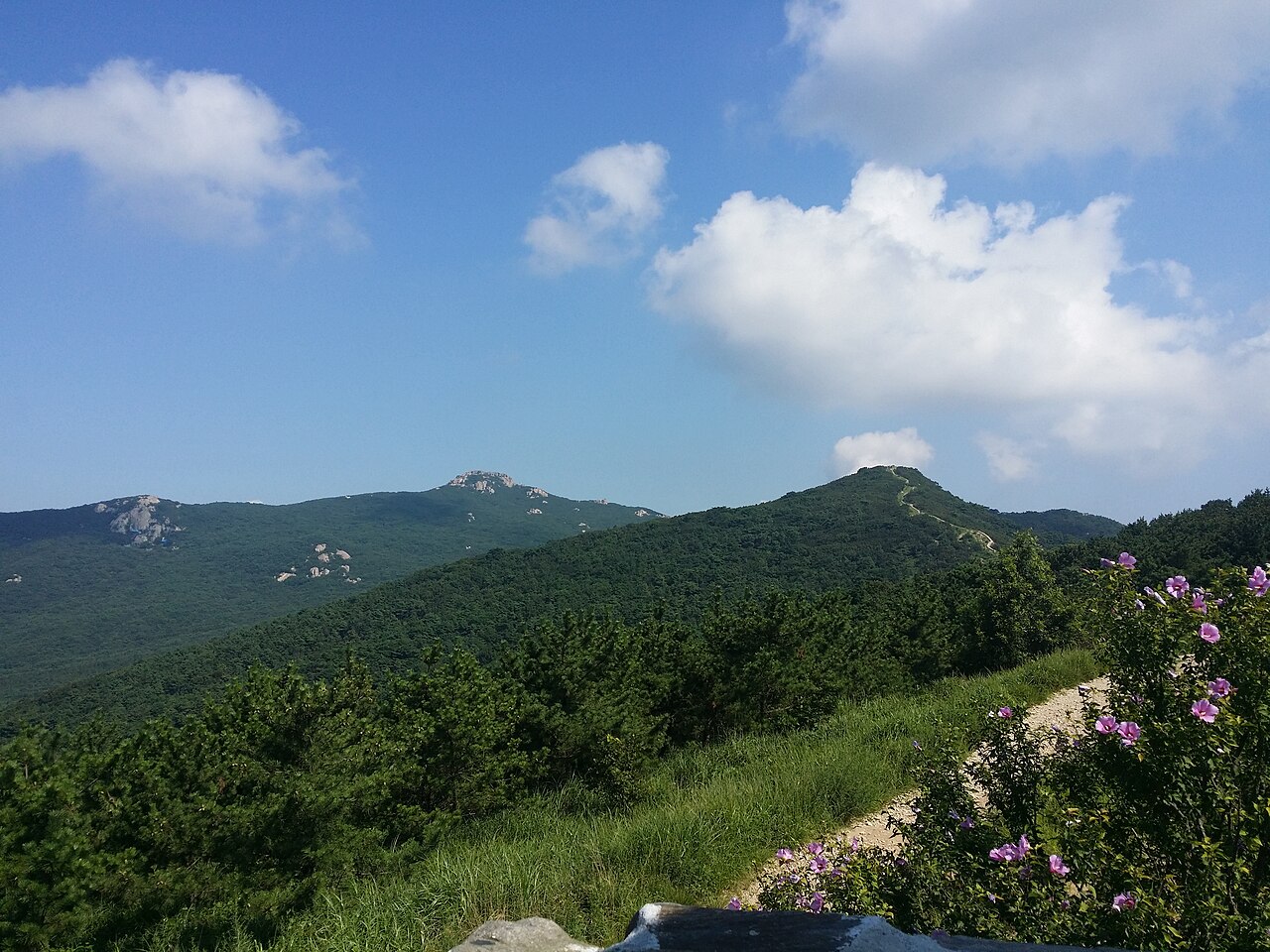
Geumjeongsan-seong (금정산성), built in 1703, wraps about 18 kilometres around the ridgeline — the largest stone mountain fortress in Korea. Walking a section of the moss-covered walls with Busan's port and the East Sea behind you is unlike anything else in the country. The fortress is on Korea's UNESCO World Heritage tentative list.
Beomeosa (범어사), founded in 678 CE and one of the three great temples of the Yeongnam region, still operates as an active monastery. Arriving early before the tourist buses for the morning bell ceremony is worth the effort. The temple has a Templestay program open to foreigners with English-speaking staff.
From Seoul you take KTX to Busan (about 2.5 hours), then Line 1 subway directly to Beomeosa Station (범어사역). Bus 90 or 49 gets you to the temple gate in ten minutes. No car, no rural bus scheduling, no rental logistics. For a city mountain this accessible, the quality of what you get — fortress walls, ancient temple, sea views — is genuinely high.
Getting there
From Seoul, KTX from Seoul Station or Suseo (SRT) to Busan Station takes about 2 hours 15 minutes to 2 hours 40 minutes. At Busan Station take Metro Line 1 (orange line) northbound to Beomeosa Station (범어사역) — about 40 minutes. From there, bus 90 or 49 to Beomeosa Temple gate takes around 10 minutes; taxis are available for about ₩3,000–4,000.
For the cable car approach from the south side, take Line 1 to Oncheonjang Station (온천장역) then bus 203 or a short taxi to Geumgang Park (금강공원). For Sanseong village on the west side, bus 203 from Oncheonjang is the most direct option.
Naver Map and Kakao Map are more accurate for local Busan bus routes than Google Maps.
At a glance
Elevation: 802 m (Godangbong, 고당봉) Difficulty: 3 / 5 — moderate; rope-assisted scramble near the summit boulder Typical duration: 4–6 hours round trip via Beomeosa Temple Best season: Late March–April (cherry blossom at Beomeosa); October–November (foliage); December–February (mild winters, best visibility) National park: None (city and provincial park) Entry fee: Free; Beomeosa Temple entry ₩3,000 separately
Safety
Geumjeongsan is not a national park so formal seasonal closures are rare, but Busan city can issue emergency hiking restrictions after typhoons or wildfires on short notice. Check before going if there has been recent severe weather.
The final approach to Godangbong has a rope-assisted boulder section. Wet granite is noticeably slippery; avoid in heavy rain or strong wind. Trail shoes with grip are required — running shoes are not enough.
Busan rarely gets heavy snow, but the ridgeline above 600 m can ice in January and February. Light crampons are a sensible precaution on cold nights for the summit section.
Wild boar have been reported on the lower forested slopes. Do not approach.
Cell coverage is good across the entire mountain. Emergency: 119. Tourist helpline in English, Chinese, and Japanese: 1330.
Map
Food on the trail
Sanseong village (산성마을) inside the fortress walls is the real food destination. The restaurants here are famous across Busan for sanseong makgeolli (산성막걸리) — a cloudy, tangy rice wine with centuries of local brewing tradition — paired with bossam (보쌈, boiled pork with kimchi) or pajeon (파전). This combination is a genuine Busan food tradition. Most spots are cash only and prices are low. Get here by descending via the North Gate (북문) after the ridge walk.
Near the Beomeosa trailhead there are small cafés and convenience stores — GS25 or CU within ten minutes of the bus stop for gimbap and drinks before heading up.
Godangbong itself has no facilities. Carry at least 1.5 L of water and your own snacks; the only seasonal drinks vendor is near the North Gate shelter.
Makgeolli contains wheat. Bossam is pork. Almost all soup bases at trailhead restaurants use anchovy or pork stock — relevant for vegetarians.
Packing tips
Grip-sole trail shoes — the summit boulder and the stone fortress path both need traction; road runners are not suitable. Water 1.5 L or more — no reliable water sources on the upper trail; fill at Beomeosa or Sanseong village before ascending. Light crampons January–February — available to rent at shops near the Beomeosa trailhead. Sun protection for the fortress ridge — the walls are fully exposed with no shade; hat and SPF 50+ essential in summer. Cash ₩10,000–20,000 — Sanseong village makgeolli restaurants are cash only.
Best season
Late March–April: Cherry blossoms line the Beomeosa approach road, typically peaking late March to early April. Azaleas follow on the upper ridges through April.
June–August: Hot and humid. The lower forest trail stays shaded but the fortress ridgeline is exposed and brutal in the afternoon. Start early. Typhoon season in August–September can bring short-notice trail closures.
October–November: Foliage peaks mid-October to early November. The moss-covered fortress walls framed in red and gold maple are among the better autumn scenes in the southeast. Busiest weekends of the year.
December–February: Busan's mild climate means Geumjeongsan is hikeable when most Korean mountains are either closed or buried. Clear winter days deliver the best visibility — Busan port, the Nakdong River estuary, and the East Sea horizon all visible from Godangbong on a good day.
Culture & history
Geumjeongsan (金井山) means Golden Well Mountain. The legend has a golden fish riding a five-coloured cloud down from heaven to swim in a golden spring near the summit — a spring said never to run dry. The mountain and the temple at its base both take their names from this story: Beomeosa (범어사) combines the characters for divine being (梵) and fish (魚).
Beomeosa was founded in 678 CE during the reign of Silla King Munmu and became one of the three great temples of the Yeongnam region alongside Tongdosa and Haeinsa. During the Japanese colonial period it served as a centre of the Korean independence movement, sheltering several notable independence fighters. The main hall Daeungjeon (대웅전) and other Joseon-era timber structures are designated national treasures.
Geumjeongsan-seong fortress was built in 1703 as a defensive wall against potential Japanese naval incursions — a response to the trauma of the Imjin War a century earlier. The wall ran approximately 18 km and enclosed four gates (east, west, south, north). It is the longest mountain fortress in Korea and sits on the UNESCO World Heritage tentative list. Walking the walls, you are looking south toward the sea that the fort was built to watch.
Frequently asked questions
›How high is Geumjeongsan?
Geumjeongsan rises to 802 m above sea level.
›How difficult is hiking Geumjeongsan?
The difficulty of Geumjeongsan is rated 3/5 (Moderate). Difficulty varies by trail, so check each course before you go.
›When is the best season to hike Geumjeongsan?
The best time to hike Geumjeongsan is Fall.
Have more questions? Ask the community on Connect Korea →