
Why visit
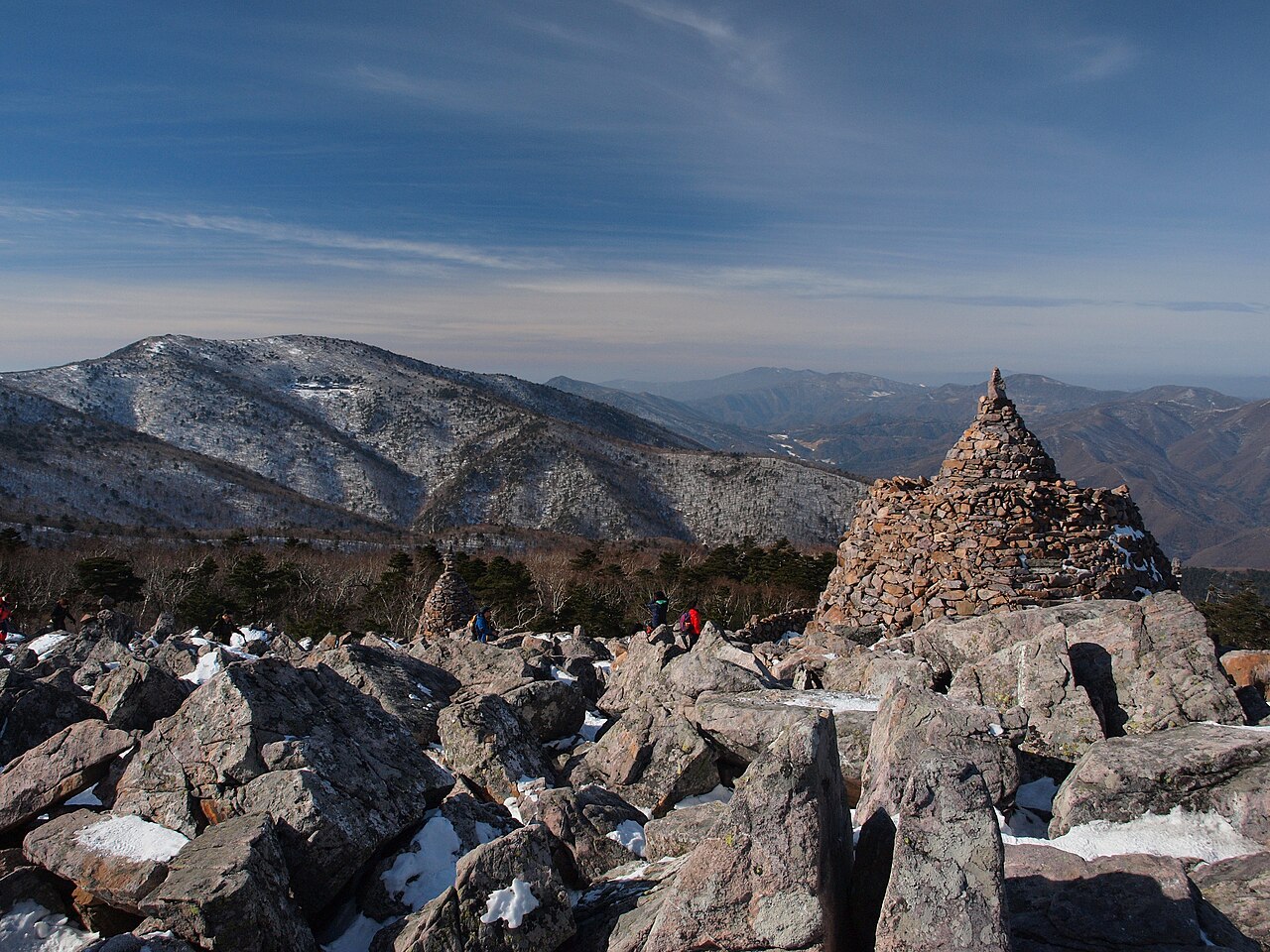
The winter snow scenery is the main draw, and it is legitimately spectacular. Taebaeksan typically accumulates deep, dry snow that persists well into March — the upper plateau becomes a landscape of frosted trees, open ridgelines under wide skies, and snow so consistent it feels like a different country. The January Snow Festival draws large crowds, but even outside of festival dates the mountain earns its winter reputation.
The approach to the summit is more accessible than most alpine peaks. The main Dangol trailhead puts the summit within a 2–3 hour round trip at a manageable pace — which means the mountain is genuinely achievable for people without extensive hiking experience, provided they are geared for winter cold. In summer and autumn it is a pleasant but less distinctive mountain.
The ceremonial altar (천제단, Cheonjaedan) at the summit is functioning, not decorative. The national Gaecheon-jeol ceremony (개천절, October 3rd, Korea's National Foundation Day) is held here, and smaller rites take place throughout the year. Standing at the altar with the ridgeline stretching in both directions and Taebaek city visible below is a moment with unusual weight to it.
Getting there
From Seoul Cheongnyangni Station (청량리역), take the Taebaeksan (태백산) or Baekdu-daegan train to Taebaek Station (태백역) — about 3.5–4 hours, operated by Korail. From Taebaek Station, take local bus or taxi to Dangol (당골) trailhead, the main entry point. Taxi from station to trailhead is about ₩7,000–10,000 and takes 10 minutes.
Alternatively, intercity buses from Dong-Seoul Terminal to Taebaek take about 2 hours 40 minutes.
During the January Snow Festival, shuttle buses run from Taebaek city centre to the mountain — check the festival schedule for dates and times.
Note: Taebaek city is remote. If you plan an overnight, pre-book accommodation — options are limited and fill up fast during the snow festival period.
At a glance
Elevation: 1,567 m (Janggunbong summit) Difficulty: 2–3 / 5 — moderate; accessible winter summit with proper gear Typical duration: 2–3 hours round trip from Dangol trailhead Best season: January–February (snow scenery); October (foliage + clear air) National park: Taebaeksan National Park (태백산국립공원) Entry fee: ₩2,000 adults Nearest city: Taebaek (태백시)
Safety
Wind chill: The upper plateau is fully exposed. Winter wind chill can drive effective temperatures well below -20 °C. Down jacket, face cover, and insulated gloves are not optional in January–February.
Crampons: The trail to the summit is icy in winter. Micro-spikes at minimum; full crampons if recent snowfall has not been packed by other hikers.
Visibility: Whiteout conditions occur. If visibility drops sharply, descend immediately via the main trail. Do not attempt to navigate off-trail in winter.
Trail closures: Check KNPS (knps.or.kr) or call 1330. Standard fire-prevention closures apply in spring and autumn.
Emergency: 119. The trail is well-used in winter and well-patrolled during festival periods, but cell coverage can be patchy on the exposed upper plateau.
Map
Food on the trail
Dangol trailhead area: Food stalls and small restaurants near the entrance, busiest during the Snow Festival. Expect hot food focused on warmth — hot broth soups (국밥, gukbap), corn, sweet potatoes (군고구마), and hot drinks. These are practical winter fuel, not culinary destinations.
Taebaek city: More restaurant options including galbi (갈비), Korean BBQ, and basic Korean home cooking. Worth eating a proper meal here before heading to the trail in winter.
On the mountain: No vendors above the Dangol area. Carry a thermos of hot water or tea — the cold is intense and hot liquid matters.
Packing tips
Winter essentials (December–March): Down jacket, thermal base layer, insulated pants or over-trousers, balaclava or neck gaiter, insulated gloves. Crampons — strap type or micro-spikes; icy trail to summit. Thermos with hot drink — critical in winter; the cold on the plateau is serious. Sunglasses — snow glare on open plateau causes snow blindness without eye protection. Water 1.5 L — carried close to body to prevent freezing. Gaiters — prevent snow from entering boots on the deep-snow sections.
Best season
January–February: The defining season. Deep snow, frosted trees (상고대, sanggodae), open sky, and the ceremonial altar — this is when Taebaeksan is most itself. The Snow Festival (태백산 눈축제) usually runs for two weeks in late January. Book accommodation months in advance if visiting during the festival.
March–April: Snow retreats slowly; a good shoulder season for quieter winter conditions without full blizzard risk.
May–September: Pleasant forest hiking. Less dramatic than winter but a comfortable mountain. Fewer visitors than peak autumn/winter.
October: Second best season. Clear air, foliage, and the high-plateau feel without deep snow. October weekends get busy.
Culture & history
Taebaeksan occupies a singular place in Korean cultural mythology. According to the Dangun legend recorded in the Samguk Yusa (13th century), Hwanin (the Heavenly King) sent his son Hwanung to earth at Taebaeksan, where he descended to a sandalwood tree and established an earthly domain. Dangun, born of Hwanung and a bear-woman (웅녀), then founded Gojoseon — the first Korean state — in 2333 BCE. Whether this origin story is taken literally or symbolically, Taebaeksan is the mountain at the root of Korean national foundation narrative.
The Cheonjaedan (천제단, Celestial Altar) at the summit is believed to date to ancient times as a site of sky worship. It was used through the Joseon period, fell into disuse, and was formally restored as a national ritual site in the modern era. The October 3rd Gaecheon-jeol ceremony here is one of the few state rituals in Korea that takes place on a mountain summit.
Taebaek city itself was a major coal mining centre through the 20th century — the mountain's foothills contain extensive mining infrastructure that is now partially preserved as industrial heritage. The coal economy that shaped modern Taebaek is visible from the approach roads.
Frequently asked questions
›How high is Taebaeksan?
Taebaeksan rises to 1567 m above sea level.
›How difficult is hiking Taebaeksan?
The difficulty of Taebaeksan is rated 3/5 (Moderate). Difficulty varies by trail, so check each course before you go.
›Do I need a reservation to hike Taebaeksan?
No reservation is needed for the main trails on Taebaeksan. Just check trail conditions before you set out.
›When is the best season to hike Taebaeksan?
The best time to hike Taebaeksan is Winter.
Have more questions? Ask the community on Connect Korea →