
Why visit
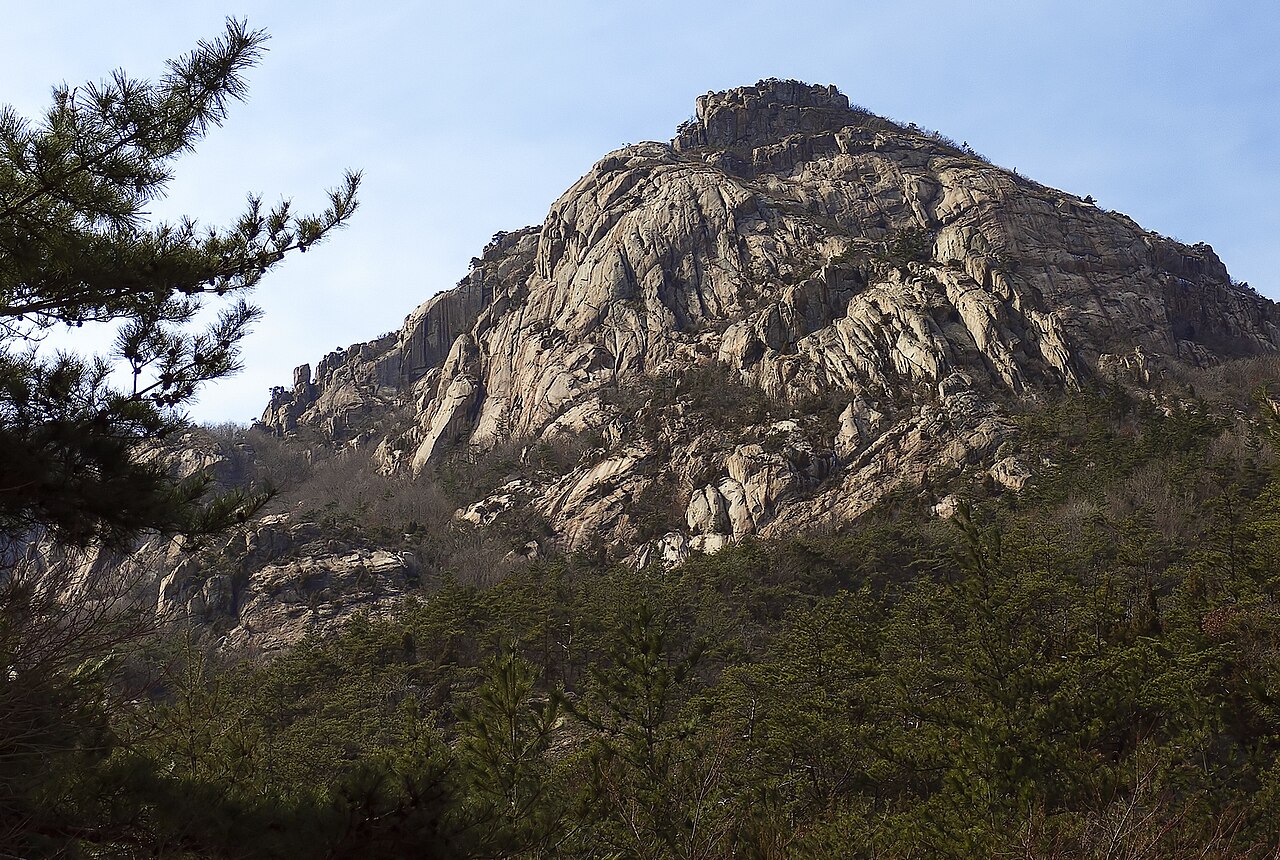
The granite ridge is exceptional for its elevation. Wolchulsan's peaks — Cheonhwangbong (천황봉, 809 m) and the subsidiary ridges — are composed of steep, textured granite with fixed ropes, exposed traverses, and viewpoints that feel far larger than the 809 m summit height suggests. Looking north from the ridge across the Yeongam flatlands to distant mountains gives an oddly dramatic visual impression because the contrast between the rough stone peaks and the flat agricultural plain below is so extreme.
The Gureumdari (구름다리, "Cloud Bridge") — a suspension bridge crossing a chasm between two rock peaks at about 510 m altitude — is one of the more unusual features of any Korean national park. It is 52 metres long and 120 metres above the valley floor. Walking across it is not for those uncomfortable with heights.
Wolchulsan sits close to Gangjin and Naju, both significant in Korean celadon history. Combining a Wolchulsan day with a ceramics museum visit at Gangjin makes for an efficient double-purpose trip to South Jeolla Province.
Getting there
From Seoul, take KTX or SRT to Mokpo (목포) or Gwangju Songjeong Station (광주송정역) — about 2 hours 30 minutes. From Mokpo, take a local bus or taxi to Yeongam (영암) and then to the Cheonhwang trailhead (천황 등산로 입구). Total journey from Seoul is about 3.5–4 hours.
Alternatively, take an intercity bus from Seoul to Gwangju (광주) and then a connecting bus to Yeongam.
Taxi from Yeongam bus terminal to the Cheonhwang or Dogapsa trailhead is about ₩10,000–15,000. Given the travel distance, staying one night near Yeongam or Gangjin is strongly recommended.
At a glance
Elevation: 809 m (Cheonhwangbong summit) Difficulty: 4 / 5 — steep granite with rope sections; harder than elevation suggests Typical duration: 4–5 hours round trip from Cheonhwang trailhead Best season: April (spring flowers on flatlands below); October–November (foliage) National park: Wolchulsan National Park (월출산국립공원) Entry fee: ₩1,600 adults Nearest city: Yeongam (영암), Gangjin (강진)
Safety
The technical character of this mountain is higher than the elevation implies. Fixed rope sections and exposed granite traverses require both hands and should not be attempted in rain or by inexperienced hikers without prior scrambling experience.
The Gureumdari (구름다리): The bridge is safe and well-maintained, but genuine height exposure — 120 m above the valley. Not suitable for those with significant fear of heights. Turning back at this point is a reasonable decision.
Isolation: Wolchulsan is remote from Seoul. Emergency response times will be longer than at Seoul-area mountains. Careful preparation and route sharing are more important here.
Trail closures: KNPS fire-prevention schedule. Confirm at knps.or.kr.
Emergency: 119.
Map
Food on the trail
Trailhead area: Small food stalls and basic restaurants near the Cheonhwang and Dogapsa trailheads. Simple Korean food — bibimbap, doenjang jjigae, and drinks. Do not expect much here; this is not a heavily touristed mountain area.
Yeongam town: More options — local restaurants serving gat-gimchi (갓김치, leaf mustard kimchi — a South Jeolla specialty), grilled galbi, and seafood from nearby coasts.
Gangjin: If you are combining with a ceramics museum visit, Gangjin has good restaurants serving local Jeolla cuisine.
On the mountain: No vendors above the trailhead. Carry everything.
Packing tips
Grip gloves — essential for the rope sections on upper granite. Water 2 L — no sources above the trailhead; the climb is steep and exposed. Rain gear — if rain is forecast, reconsider the upper ridge. The granite is very slippery wet. Crampons November–February. Overnight bag if staying — given the travel distance, a 1-night stay makes the trip more enjoyable. Height comfort — honestly assess whether the Cloud Bridge is appropriate for you before the climb.
Best season
April: The agricultural flatlands surrounding the mountain bloom with cherry blossoms, rape flowers (유채꽃), and azaleas. The contrast between the rough granite peaks and the blossoming plains is striking and best appreciated from the upper ridge.
May–September: Good hiking weather. The mountain is at its most verdant; summer heat is less intense here than in Seoul due to the sea proximity.
October–November: Foliage season on the slopes. Not as famous as Naejangsan but the combination of granite ridgeline and autumn colour is distinctive.
December–February: Cold; upper granite can be icy. The mountain is quiet in winter. The view of frost-covered peaks above the flat southern coastal plain is unusual.
Culture & history
Wolchulsan's name (月出山, "Moon Rising Mountain") comes from the view of the moon rising over the jagged granite peaks from the Yeongam plain below — an image documented in classical Korean poetry and painting. The silhouette of the serrated peaks against a rising or setting sky is one of the compositional subjects of the Honam (Jeolla) painting tradition.
Dogapsa Temple (도갑사) on the mountain's western slope was founded in the Silla period. Its stone gate (解脫門, Haetalmun, "Gate of Liberation") is one of the finest examples of Goryeo-era stone gateway architecture in Korea and is designated a national treasure (국보 제50호). The gate's scale and the quality of its stone carving are worth a detour.
Yeongam County below the mountain is famous as the birthplace of Wang Geon (왕건), founder of the Goryeo dynasty (918 CE) — though this claim has contested historical basis. The county maintains a heritage site related to this origin story. Yeongam is also significant in celadon history, with kiln sites from the Goryeo and Joseon periods documented in the surrounding area.
Frequently asked questions
›How high is Wolchulsan?
Wolchulsan rises to 809 m above sea level.
›How difficult is hiking Wolchulsan?
The difficulty of Wolchulsan is rated 4/5 (Hard). Difficulty varies by trail, so check each course before you go.
›Do I need a reservation to hike Wolchulsan?
No reservation is needed for the main trails on Wolchulsan. Just check trail conditions before you set out.
›When is the best season to hike Wolchulsan?
The best time to hike Wolchulsan is Spring.
Have more questions? Ask the community on Connect Korea →